Domain name lifecycle
| Lifecycle | |
|---|---|
| Typical term | 1–10 years per registration |
| Transfer lock | Often 60 days after create/transfer (gTLD policy) |
| Standards body | ICANN consensus policies / RFC 3915 statuses |
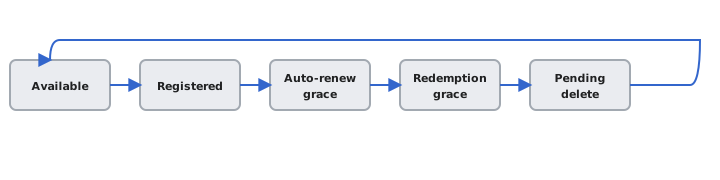
A domain registration is a time-limited contract. Names move through predictable states from availability to deletion. Exact lengths of grace periods vary by TLD and registry; the stages below follow common gTLD practice described in registrar documentation and ICANN materials.[1]
Step-by-step registration
- Search availability (RDAP/WHOIS or registrar API) — see Domain name search.
- Choose a registrar and complete checkout — How to buy a domain.
- Verify contact data if required; enable DNSSEC/privacy where offered.
- Point nameservers or use registrar DNS; add records for web/mail.
- Monitor renewal dates; enable auto-renew to avoid accidental loss.
Renewal, grace, redemption, deletion
- Active / registered — name resolves under registrant control until expiry.
- Auto-Renew Grace — short period after expiry when renewal is still straightforward (length TLD-specific).
- Redemption Grace Period — name is withheld; restore usually costs more than a normal renewal.
- Pending Delete — final purge from the registry; afterward the name may become generally available again.
EPP status codes such as redemptionPeriod and pendingDelete are defined for domain registries in community standards (see RFC 3915).[2]
Transfers
Moving between registrars typically requires an auth/EPP code, unlocking the domain, and approval; many gTLDs add one year on a successful transfer. Details: Domain transfer.